The Race Observer
Watch before you decide
You go to the dinners. You watch the founders present, you ask the question nobody else thinks to ask, and most evenings you go home without writing anything. You have done this for years.
Mason, Botelho and Zygmunt put a name to the evenings you went home empty-handed. They call it almost-investing: in their 2017 data, an angel typically almost-invests several times before ever investing.
The Race Observer is built for exactly that. You watch fifty founders for a year, and the week you write a cheque is the week one of them stops being a maybe.
Position: Observer Investor
Commitment: None
Cheque value: You decide
What you do, as a Race Observer
You watch fifty UK founders compete for as long as you want. Each is running a real business, its weekly revenue connected from its own accounting software, clearing eight binary investment-readiness milestones in the portal, and ranked weekly on a league table you can read in fifteen seconds.
You watch through the Race Observer portal, with a summary of each week sent to your inbox, so you can follow as closely or as lightly as you like. The first Race runs from Summer 2026 and the portal is being built for it now. Where you're looking at a design rather than live data, it will say so.
You don't have to start at the gun. An Observer who joins in Week 20 reads the back-weeks the way you'd read a league table in May: the early form is all there, and the season is still running.
Some weeks nothing moves on the league table. Some weeks one or two pull away from the rest. The watching is mostly quiet, and quiet is useful: a year of it is the looking that a first cheque almost never gets.
What you stop doing
The pleasure here is restraint. You do not take a meeting unless you want to take a meeting. You do not read a deck. You do not perform conviction you have not earned. You do not sit through a demo day, a pitch night, or a round of speed-dating with founders you met for the first time at the same event. You do not commit capital before the evidence has resolved you.
You watch, and you wait, and when the data resolves you, you decide what you want to do next.
What you are watching, that no other UK position lets you watch
A Race Observer sees, week on week, across fifty founders simultaneously:
Revenue, from the founder's own books. Connected from their accounting software, Xero or QuickBooks, reported on an accruals basis, net of VAT. Faking one week is easy. Faking fifty-two of them, each one checked against the balance sheet and the places revenue games tend to surface, is the hard part. We keep the detection detail in-house, so it can't be designed around.
Behaviour under pressure. What a founder does in Week 27 after a difficult Week 26 is the evidence Colin Mason has spent thirty years arguing matters most. You watch it happen.
Milestones, cleared visibly. Eight binary investment-readiness milestones (clean cap table, IP assignment, founders' agreement with vesting, SEIS Advance Assurance, documented customer evidence, defensible valuation narrative, weakness disclosure, recorded Q&A stress test) cleared by each racer at their own pace, in your view.
Identity confidence. A monthly single-item measure of the racer's own assessment of their investability. Harrison and Mason (2017) found that experienced angels weight disconfirming evidence more heavily than confirming evidence; the Dashboard is built around that asymmetry.
Trajectory slope. Month-over-month growth rate. Movement matters more than rank, and the Dashboard surfaces it.
Wiltbank's data, replicated in the UK by NESTA in 2009, gives the differential plainly: forty-plus hours of pre-investment due diligence produces 7.1× returns; under twenty hours produces 1.1×. By Week 28 you have the equivalent of forty hours, gathered passively, across fifty founders at once.
When you decide to act
Most weeks you do nothing, and nothing is the right move. When a founder has earned your attention, you have three ways to act, and the Race keeps them structured so that no founder is quietly courted off the table while the rest are still running.
Back them now, through the Buzzer. If you can write more than £100,000, you can make a direct investment in a racer between Week 12 and Week 50, with their consent. Two to four of these are allowed per Race, set in advance. The terms are yours to agree, SEIS-eligible where the founder holds Advance Assurance, and the founder leaves the Race once the investment closes. The founding syndicate may invest alongside you on the terms you set, to the extent each member funded the prize, so the angels who funded the prize aren't shut out of the founder you pick. The full arithmetic, including SEIS relief on £100,000 for a 45% taxpayer, is on the Golden Buzzer page.
Back a runner-up after the finish. A founder who finishes outside the prize with all eight milestones cleared and SEIS Advance Assurance in hand is a company that has already built the things you would normally wait months for: a clean cap table, a data room that's already populated, and a valuation narrative that survives questioning. For six to twelve months after the Race, with the founder's consent, these are introduced to Observers. The year of evidence you watched is the due diligence.
Wait for the next Race. Some Observers find that watching is the whole of what they came for, and watching the next fifty is what they want to do next. The calendar allows for that.
None of these happens by default. The default is to keep watching.
The position, briefly
Cheque at entry: none.
Cost for Race 1: none, covered under Pricing below.
What you watch: fifty founders, weekly, through to Week 52. Join whenever you like; the back-weeks are open to you.
Race calendar: Summer 2026 to Summer 2027.
Acting mid-race: the Golden Buzzer, for cheques of more than £100,000, with the founder's consent.
Acting after the finish: the post-race window, six to twelve months, on terms between you and the founder.
Race 1 is free. The first cohort of Observers watches the £100,000 Startup Race at no charge. From Race 2, the position carries an annual membership and admin fee in line with established UK angel networks, around £1,000 a Race, published openly. You see the whole of the first Race before deciding whether to renew.
No transaction fee, no commission. The Startup Race takes nothing on any investment you make, whether through the Buzzer or after the finish. The model is the one Archangels, Cambridge Angels and other UK networks have used for years: membership and admin only, with your return coming from the equity you hold rather than any cut we take.
A note on the limits
The method is built to reduce the main causes of angel losses: thin information, weak selection, and due diligence done under time pressure. It is not built to guarantee returns, and nothing on this page should be read that way.
Revenue growth during the Race shows that a founder can execute. It does not tell you how the investment ends. This £100,000 Race is the first at this scale; the earlier £1,000 and £10,000 Races showed founders can grow revenue fast, which is not the same as showing what a cheque this size returns.
This position is for readers who already know that the absence of a guarantee is what the returns, when they come, are paid for.
The people who pressure-tested it
The first Startup Race ran in 2020: a £1,000 prize, crowdfunded in a room above an Edinburgh design agency on the impulse of that evening's guest speaker, James Varga. The winner, Jonas Virsilas, grew revenue twelve-fold in ten weeks. The model worked, and the numbers were there to prove it.
What came after was years of argument with people who had spent their careers building Scotland's startup and investment infrastructure. Some advised. Some pushed back hard. A few said the thing we hadn't managed to say ourselves.
Ian Ritchie CBE, Commander of the Order of the British Empire for services to enterprise and education, was one of the first angels to watch a Race. He put words to what it gave investors that nothing else did: a year of watching a founder before deciding anything. That line became the proposition.
Paul Atkinson, founding partner of Par Equity, now PXN Group with £670m under management, did the arithmetic the rest of us had skipped. A founder starting from nothing can't build enough revenue in a year to justify selling ten percent of the company for £100,000. The £5,000 ARR entry threshold is the answer to his objection.
Michiel Smith, who screens deals at Apollo Informal Investment, raised the objection every experienced angel reaches within thirty seconds: reward revenue and founders will manufacture it. The anti-gaming work exists because he would not let it go.
Nick Lyth, founder and president of the Green Angel Syndicate, was among the first to see what the model opened up for investors.
Mary Jane Brouwers, once of Old College Capital and now Entrepreneur in Residence at Edinburgh Napier University, on what the model gave founders.
Alan Donald, formerly of LINC Scotland, the national association for Scottish business angels, on how angel investing here actually works.
Jonathan Harris, formerly of Young Company Finance and now retired, on how the investment press would read it.
Years of design, held up against people whose criticism counted. The £100,000 Race is what came out the other side, and it is the first one big enough to be worth your full attention. It is also the first UK programme built for how thirty years of Colin Mason's research says angels actually decide, rather than for how angels say they do.
Who runs it
The Startup Race was co-founded by James Shoemark, Michael Clouser, and Dan Drummond (Heriot-Watt, First in Economics), who met at a founder and investor event in Edinburgh in 2015.
James Shoemark, Co-Founder and CEO, is a Level 3 LeanStack coach trained by Ash Maurya. He has coached over a thousand founders and graduated seventy-six startups through accelerator programmes since 2014.
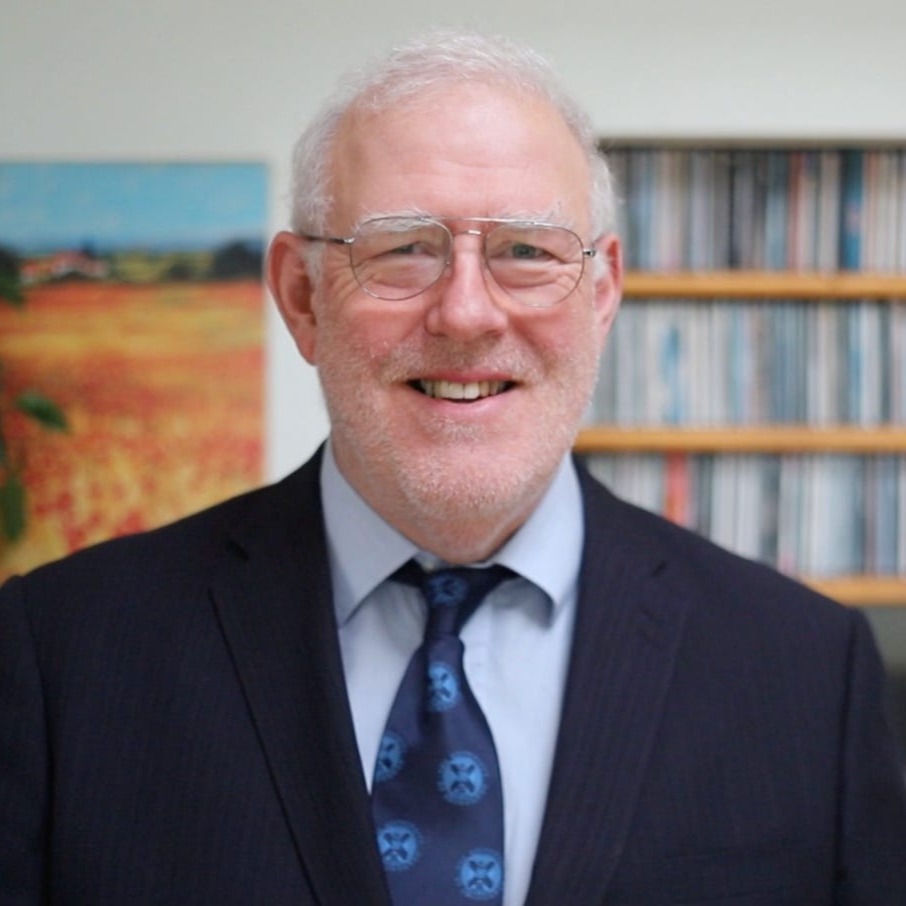
Mike Clouser, Co-Founder, is a former venture capitalist and academic entrepreneur at Cornell and the University of Edinburgh. He brings the investor's side of the table: what an angel needs to see before writing a cheque, and why standard diligence keeps missing it.

In ten years, we believe every startup will have a track record before it has a term sheet.
Becoming a Race Observer
Once you have provided your contact details, you will gain access to the self-certification form immediately. Everything from there is sequenced - you set the pace.
For the questions a written page cannot answer, book a call with James Shoemark.
For the full evidence base, the methodology and the terms, read the full investor memo.
FCA Requirements
Participation requires self-certification as a High Net Worth Individual or Self-Certified Sophisticated Investor under FCA Articles 48 and 50A of the Financial Promotion Order. Self-certification happens after expression of interest, before any communication that constitutes a financial promotion.
High-Net-Worth Individual: you meet at least one of the following.
Income of £100,000 or more
Net assets of £250,000 or more, excluding your home and pension.
Self-Certified Sophisticated Investor: you meet at least one of the following.
A member of a business angel network for six months or more.
You have made two or more investments in an unlisted company in the past two years
You have worked in the past two years in a professional capacity in private equity or in financing small and medium-sized businesses
You have been a director, in the past two years, of a company with annual turnover of at least £1 million
The £100,000 Startup Race operates as a private investment club within the meaning of Article 51 of the Regulated Activities Order. The Startup Race Ltd is not arranging an investment deal but is providing better data, so investors can make better decisions. Investor communications rely on the self-certification exemptions in the Financial Services and Markets Act, including Articles 48 and 50A of the Financial Promotion Order.
Risk Warning and Investment Disclaimer
Investment in early-stage companies involves significant risks including illiquidity, lack of dividends, and potential total loss of capital. SEIS tax reliefs mitigate but do not eliminate this risk. Tax treatment depends on individual circumstances and may change. Please seek independent professional advice before investing. This page is general commentary and operational disclosure. It is not investment advice, a recommendation, or a financial promotion.
The Startup Race Ltd is listed by the Home Office as a Legacy Innovator Endorsing Body. We may provide further endorsements only for founders we endorsed before 13 April 2023, for the same business. We are not accepting new applicants for endorsement. The Endorsement Readiness Programme is education and coaching. It is not an endorsement.
We are not regulated by the Immigration Advice Authority and we do not give immigration advice. For advice about your visa or immigration status, please speak to a regulated immigration adviser or solicitor.
The Startup Race Ltd. Registered in Scotland, company number SC536976.
Registered office: Orchard Brae House, 30 Queensferry Road, Edinburgh, EH4 2HS.
© Copyright The Startup Race 2026 | Finding Neo's Since 2016